
The Cult of Struggle
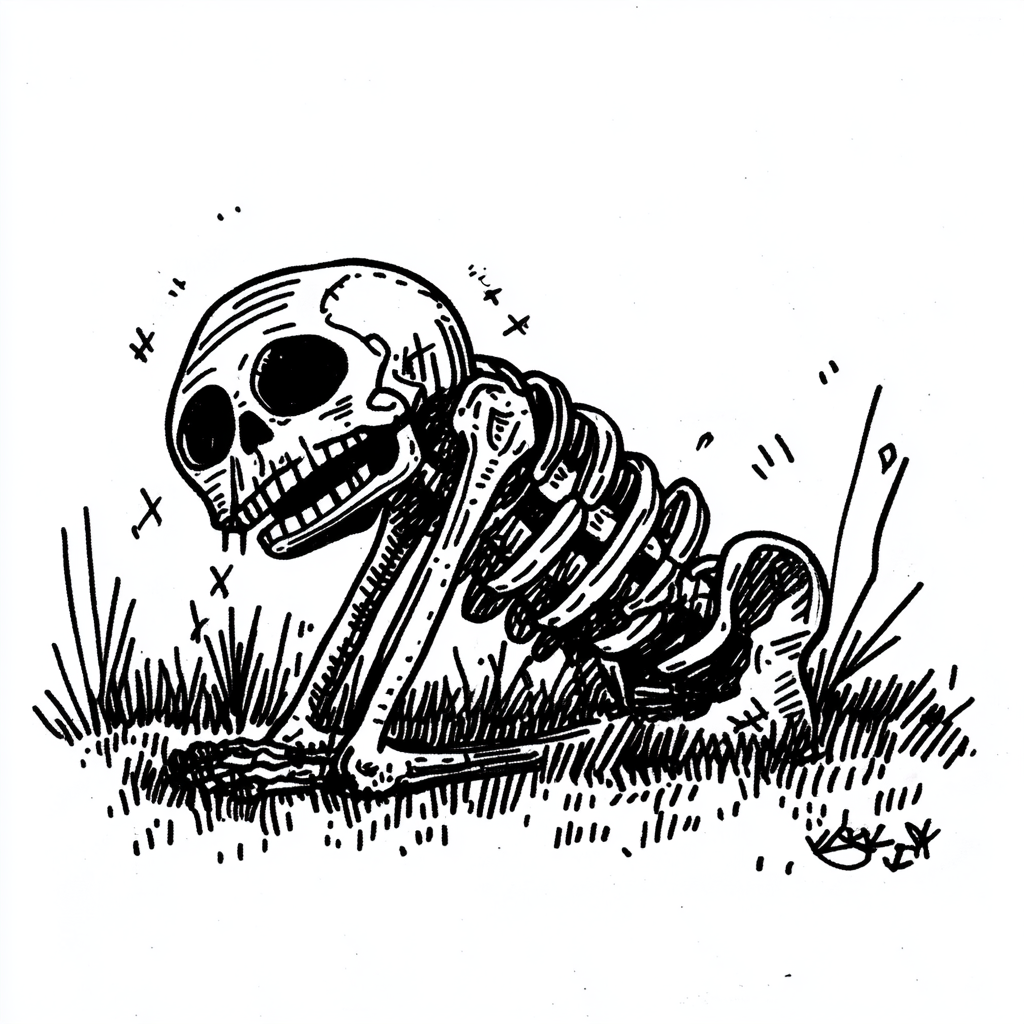
We worship pain. We punish ease. And we all suffer for it.
April 7, 2025
Picture this: a gallery visitor stands before an abstract canvas—lines, splatters, maybe a suspiciously familiar AI aesthetic. They scoff. “My kid could do that,” they mutter, sipping warm Chardonnay. The curator, sensing doubt, chimes in: “Actually, the artist spent six years studying under a monk in Kyoto and painted this during a silent retreat after a personal tragedy.” Ah, now it’s brilliant.
This is the cult of struggle. The deeply held, quietly snobbish belief that if art wasn’t painful to make—or if it looks like it wasn’t—then it isn’t real. And it’s poisoning how we see creativity, especially in an age when technology is making it easier for more people to create than ever before.
The Myth of the Suffering Artist
We love a tortured genius. We’ve been conditioned to think that great art only comes from great pain. Van Gogh cutting off his ear. Kafka dying in obscurity. The indie filmmaker maxing out credit cards to finish their magnum opus. We fetishize effort—and confuse it with value.
So when art is made quickly, joyfully, or with help—especially from a machine—we don’t just devalue it. We actively distrust it. As if the absence of blood, sweat, and tears makes it fraudulent. Enter: AI art, punk rock, hip hop, horror films, EDM, pro wrestling, sampling music, NFTs, outsider zines. All disrespected by the same people who say they “respect the craft.”
This isn’t just personal preference—it’s gatekeeping with a halo. A form of aesthetic elitism dressed up as discernment. The kind that says only certain tools, tones, and traditions produce “real” art. Everything else? Lowbrow. Amateur. Fast food for the soul.
And it’s shockingly consistent: punk is “not real music,” wrestling is “fake sports,” horror is “one step up from porn,” NFTs are “just JPEGs,” and AI art? “Not made by humans.” Which is hilarious, because...
There Is No Autonomous AI Artist (and There Never Has Been)
As I’ve written before, AI doesn’t make anything on its own. It’s a tool—like a camera, a synthesizer, or Photoshop. Every AI-generated image, beat, or story was made by a person with a vision. The human didn’t disappear—they just skipped the decades of gatekeeping and got straight to the expression.
So when people argue that AI art “isn’t human,” what they really mean is that it wasn’t made the old way. That it didn’t involve enough toil to qualify for praise. That it’s too easy to be meaningful. But here’s the twist: we’ve done this dance before.
Back when Photoshop first hit the scene, traditional graphic designers and illustrators rolled their eyes so hard they nearly pulled a muscle. It wasn’t “real” design, they said—because the computer was doing all the work. The fonts were preloaded. The textures? Built-in. The color palette? Automatic. It was seen as a shortcut for people who couldn’t do “the real thing.”
Fast forward to today, and Photoshop is practically a rite of passage. It’s taught in universities. It’s in job descriptions. It is the establishment. And now that AI tools are letting even more people create—even faster, even freer—guess who’s clutching their styluses and yelling that the new stuff isn’t “real”? Yep: the Photoshop generation.
It’s going to be hilarious when, ten years from now, AGI becomes a thing and people start insisting, “That’s not real art! At least with my art, I wrote the prompts! I prefer the traditional way—LLMs and GANs, thank you very much.”
The AI Renaissance We Could Have—If We Let It Happen
Here’s what’s actually happening: we are entering a creative renaissance the likes of which the world has never seen. A future where anyone with an idea can make a movie, paint a masterpiece, score a symphony, design a game, write a novel—without millions of dollars, gatekeepers, credentials, or suffering.
This should be cause for celebration. A world where the only barrier to art is imagination - not skin tone, pronouns, sexual orientation, or education. But instead of lighting the fuse on that cultural explosion, we’re standing around with buckets of snobbery trying to snuff it out.
Because if it’s “too easy,” it can’t be art. If everyone can do it, it must not be worth doing. Right?
What’s worse, this gatekeeping is often presented as noble. As a way to “protect” human artists from the machines. But again: there is no machine without a human. Every AI creation is a human creation. The only thing being protected here is a hierarchy—one that rewards the privileged, the trained, the traditional. Everyone else is dismissed as dabblers, hobbyists, or outright jokes.
But let’s be honest: half of the best art movements in history were driven by dabblers. D.I.Y. punks. Guerrilla filmmakers. Self-taught visionaries. Digital natives. Meme-makers. All outsiders—until the insiders needed a new trend to appropriate.
Kill the Gatekeepers
So let’s stop pretending that effort is the only measure of value. Let’s stop glorifying suffering and start celebrating what’s possible. If it moves you, it matters. If it made someone feel something, it’s art.
And if a human used a machine to skip a few years of pain and make something beautiful? That doesn’t make it less meaningful. It makes it more accessible.
The future of art is fast, weird, joyful, collaborative, and yes—sometimes easy. But if that offends you, the problem isn’t with the art. It’s with the gate you’re guarding.